Assisted Spokane
  • Home
  • Settings
    • Assisted Living
    • Home Care
    • Independent Living
    • Memory Care
    • Skilled Nursing
    • Adult Family Homes
    • All Communities >
      • Aspen Quality Care
      • Avamere South Hill
      • Brighton Court
      • Brookdale Nine Mile
      • Brookdale Park Place
      • Cheney Assisted Living
      • Cherrywood Assisted Living
      • Colonial Court
      • Cornerstone Court
      • Evergreen Fountains
      • Palouse Country
      • Fairview Assisted Living
      • Fairwinds
      • Fairwood
      • Fieldstone Memory Care
      • Good Samaritan
      • Maplewood Gardens
      • Moran Vista
      • North Point Village
      • Orchard Crest
      • Pine Ridge Memory Care
      • Emilie Court
      • Ridgeview Place
      • Riverview Retirement
      • Rockwood Retirement Community
      • Rose Pointe Assisted Living
      • Royal Park
      • South Hill Village
      • Sullivan Park Assisted Living
      • Sunshine Health Facilities
      • Touchmark Assisted Living
      • Willow Grove
      • Wind River
      • Alderwood Manor
      • Franklin Hills
      • Manor Care
      • North Central Care Center
      • Providence St Joseph
      • Regency at Northpointe
      • Royal Park Health and Rehabilitation
      • Spokane Veterans Home
      • The Gardens on University
      • Spokane Assisted Living Directory
  • Locations
    • Northside Assisted Living
    • South Hill Assisted Living
    • Spokane Valley Assisted Living
  • Services
  • About
  • Senior Living Blog
  • Contact

Why Am I So Tired?

7/28/2021

 
Picture
Everyone feels tired now and then. But, If you continue to feel tired for weeks in a row, it's time to see your doctor. They may be able to help you find out what's causing your fatigue. In fact, your doctor may even suggest you become more active, as exercise may reduce fatigue and improve quality of life.
 
Sometimes, fatigue can be the first sign that something is wrong in your body. For example, people with COPD, often complain of fatigue. People with cancer may feel fatigued from the disease, the treatments, or both. Fatigue can be attributed to many medical conditions including:
  • Taking certain medications, such as antidepressants, antihistamines, and pain relivers
  • Medical treatments, like chemotherapy, radiation, or major surgery
  • Infections
  • Chronic diseases like diabetes, heart disease, kidney disease, liver disease, thyroid disease
  • Untreated pain
  • Anemia
  • Sleep apnea
 
Emotional stresses can take a toll on your energy. Fatigue can be linked to many conditions, including:
  • Anxiety
  • Depression
  • Grief
  • Stress due to financial or personal issues

Some lifestyle habits can add to fatigue:
  • Staying up too late. A good night's sleep is important to feeling refreshed and energetic. Try going to bed and waking up at the same time every day.
  • Having too much caffeine. Drinking caffeinated drinks like soda, tea, or coffee late in the day can keep you from getting a good night's sleep. Limit the amount of caffeine you have during the day and avoid it in the evening.
  • Drinking too much alcohol. Alcohol changes the way you think and act. It may also interact with your medicines.
  • Eating junk food. Avoid food with empty calories, like fried foods and sweets, which are high in fat and sugars. Choose nutritious foods to get the energy you need.
  • Being bored. If you were very busy during your working years, you may feel lost about how to spend your time when you retire. Think about what interests you and what skills or knowledge you have to offer and look for places to volunteer.
 
How can I feel less fatigued?
Some changes to your lifestyle can make you feel less tired:
  • Exercise regularly. Almost anyone, at any age, can do some type of physical activity. If you have concerns about starting an exercise program, ask your doctor if there are any activities you should avoid. Regular exercise can help improve your sleep and may also help reduce feelings of depression and stress while improving your mood and overall well-being.
  • Try to avoid long naps. Long naps especially late in the day can leave you feeling groggy and may make it harder to fall asleep at night.  
  • Ask for help if you feel overwhelmed. Some people have so much to do that just thinking about their schedules can make them feel tired. Working with others may help a job go faster and be more fun.
​
When should I see a doctor for fatigue?
If you've been tired for several weeks with no relief, it may be time to call your healthcare provider. He or she will ask questions about your sleep, daily activities, appetite, and exercise and will likely give you a physical exam and order lab tests. Your treatment will be based on your history and the results of your exam. Your doctor may prescribe medications to target underlying health problems.

6 Things to Know About Medigap Policies

7/12/2021

 
Picture
​Medicare Supplement Insurance, often referred to as Medigap, is insurance that helps fill "gaps” in Original Medicare insurance and is sold by private companies. Original Medicare pays a significant portion of the cost for covered health care services and supplies but not the full cost. A Medicare Supplement Insurance policy (Medigap) can help pay some of the remaining health care costs such as copayments, coinsurance, and deductibles.

  1. A Medigap policy is different from a Medicare Advantage Plan. Medicare Advantage plans are ways to get Medicare benefits, while a Medigap policy only supplements your Original Medicare benefits.
  2. You pay a private insurance company a monthly premium for your Medigap policy. This monthly premium in addition to the monthly Medicare Part B premium that you pay.
  3. You can buy a Medigap policy from any insurance company that's licensed in your state to sell one.
  4. Any standardized Medigap policy is guaranteed renewable even if you have health problems. This means the insurance company can't cancel your Medigap policy as long as you pay the premium.
  5. Some Medigap policies sold in the past cover prescription drugs. But, Medigap policies sold after January 1, 2006 aren't allowed to include prescription drug coverage. If you want prescription drug coverage, you can join a Medicare Prescription Drug Plan (Part D). If you buy Medigap and a Medicare drug plan from the same company, you may need to make 2 separate premium payments. Contact the company to find out how to pay your premiums.
  6. It's illegal for anyone to sell you a Medigap policy in conjunction with a Medicare Advantage Plan, unless you're switching back to Original Medicare.
 
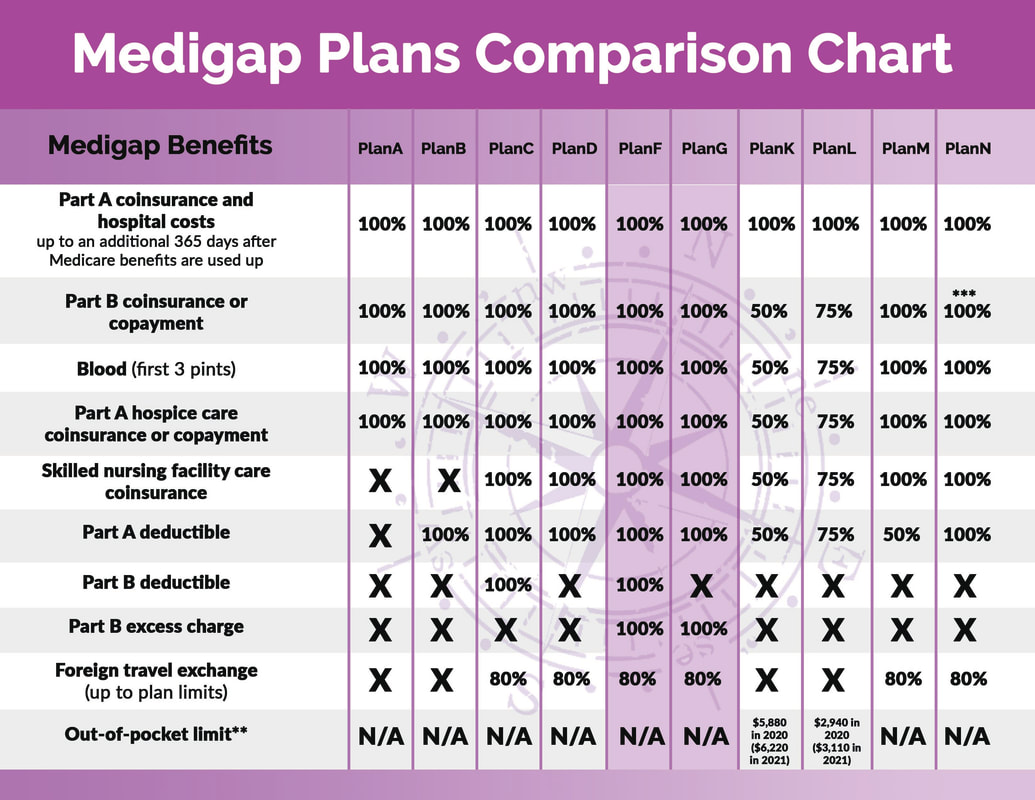
There are significant overlaps between many of the plans so you may find the chart below helpful to compare and contrast your options.
Picture
* Plans F and G also offer a high-deductible plan in some states. With this option, you must pay for Medicare-covered costs (coinsurance, copayments, and deductibles) up to the deductible amount of $2,340 in 2020 ($2,370 in 2021) before your policy pays anything. (Plans C and F aren't available to people who were newly eligible for Medicare on or after January 1, 2020.)
** For Plans K and L, after you meet your out-of-pocket yearly limit and your yearly Part B deductible, the Medigap plan pays 100% of covered services for the rest of the calendar year.
*** Plan N pays 100% of the Part B coinsurance, except for a copayment of up to $20 for some office visits and up to a $50 copayment for emergency room visits that don't result in inpatient admission.


Medicare Supplement Plan A: Medicare Supplement insurance Plan A is different from Medicare Part A, although their similar names may be confusingly similar. Medicare Part A covers inpatient hospital care and is one half of Medicare (Part A and Part B). Medicare Supplement insurance Plan A provides coverage that helps pay for out-of-pocket costs from Medicare Part A and Part B.
​
Medicare Supplement Plan B: Medicare Supplemental insurance Plan B is different from Medicare Part B, although their similar names may be confusingly similar. Medicare Supplemental Plan B covers
  • Medicare Part B copayments and coinsurance
  • the first three pints of blood you receive as a hospital inpatient or outpatient (Original Medicare usually covers any pints you receive after the first three)
  • Medicare Part A deductible
  • Medicare Part A hospital expenses and coinsurance up to 365 additional days after your Medicare benefits are depleted
  • Hospice care coinsurance or copayment (Part A)

Medicare Supplement Plan C covers:
  • Medicare Part A hospital coinsurance and hospital costs up to 365 days after Original Medicare benefits are exhausted
  • Medicare Part A hospice care coinsurance or copayments
  • Medicare Part B copayments and coinsurance
  • First three pints of blood for a medical procedure
  • Skilled Nursing Facility care coinsurance
  • Medicare Part A deductible
  • Medicare Part B deductible
  • Foreign travel emergency coverage (80% of approved costs up to plan limits)
 
Medicare Supplement Plan D Covers:
  • Medicare Part A hospital and coinsurance costs up to 365 days after Original Medicare benefits are used up
  • Medicare Part A deductible
  • Medicare Part A hospice care coinsurance and copayments
  • Medicare Part B coinsurance and copayments
  • First three pints of blood used in a medical procedure
  • Skilled Nursing Facility care coinsurance
  • Foreign travel emergency care (80% of approved costs up to plan limits)
 
Medicare Supplement Plan F covers:
  • Part A hospital and coinsurance costs up to an additional 356 days after Medicare benefits are exhausted
  • Medicare Part A hospice care copayment or coinsurance
  • Medicare Part B coinsurance
  • Medicare Part B excess charges
  • Medicare Part A deductible
  • Medicare Part B deductible
  • First three pints of blood used in an approved medical procedure (annually)
  • Skilled nursing facility coinsurance
  • Foreign travel emergency coverage (80%, up to plan limits)

Medicare Supplement Plan G covers:
  • Medicare Part A inpatient hospital coinsurance and hospital costs up to 365 days after Original Medicare benefits are exhausted
  • Medicare Part A hospice care coinsurance or copayment
  • Medicare Part A deductible
  • Medicare Part B coinsurance or copayment
  • Medicare Part B excess charges
  • First three pints of blood for a medical procedure used in a year
  • Skilled nursing facility care coinsurance coverage
  • Foreign travel emergency coverage (80%, up to plan limits)

Medicare Supplement Plan K covers:
  • Medicare Part A deductible
  • Medicare Part A hospice care coinsurance or copayment
  • Skilled nursing facility care coinsurance
  • Medicare Part B copayment or coinsurance
  • First three pints of blood for a covered medical procedure (yearly)
 
Medicare Supplement Plan L covers:
100% of the cost of:
  • Medicare Part A coinsurance and hospital costs up to one year after Original Medicare benefits are exhausted
75% of the costs of:
  • Medicare Part A hospice care coinsurance or copayment
  • Medicare Part A deductible
  • Medicare Part B coinsurance or copayment
  • First three pints of blood used in a medical procedure
  • Skilled Nursing Facility care coinsurance
 
Medicare Supplement Plan M covers:
  • Medicare Part A hospital coinsurance and hospital costs up to a year after Original Medicare benefits are used up
  • Part A hospice care coinsurance and copayments
  • Medicare Part B copayments and coinsurance
  • First three pints of blood for a medical procedure
  • Skilled Nursing Facility care coinsurance
  • Medicare Part A deductible (50%)
  • Foreign travel emergency coverage (80% of approved costs up to plan limits)
 
Medicare Supplement Plan N covers:
  • Medicare Part A hospital coinsurance and other costs up to an additional 365 days after Original Medicare benefits are exhausted
  • Medicare Part A hospice care coinsurance or copayment
  • Medicare Part A deductible
  • Medicare Part B coinsurance or copayments (except for a copayment of up to $20 for some office visits and up to a $50 copayment for emergency room visits that do not result in inpatient admission)
  • First three pints of blood used in a medical procedure (yearly)
  • Skilled nursing facility care coinsurance
  • Foreign travel emergency care (80%, up to plan limits)

What to do After Someone Passes Away

7/1/2021

 
Picture


When someone you love dies, the job of handling the personal and legal details may feel overwhelming during a time of grief. It is a big responsibility that can take a year or more to complete. It is unlikely you will be able to do it alone. Settling a deceased family member's affairs is not a one-person task. You may need the help of others, ranging from lawyers and CPA’s to funeral directors and movers. Also don’t be afraid to ask for help from trusted friends and relatives. Making a list details that need to be addressed will help keep you organized and prevent things from slipping through the cracks. This guide will get you started.
 
 
1. Get a legal pronouncement of death
As soon as possible, the death must be officially pronounced by someone in authority like a doctor in a hospital or nursing facility or a hospice nurse. This person also fills out the forms certifying the cause, time, and place of death. These steps will make it possible for an official death certificate to be prepared. This legal form is necessary for many reasons, including life insurance and property issues.
 
2. Arrange for transportation of the body 
Arrangements should be made to pick up the body as soon as the family is ready and according to local laws. This can be done by a funeral home or by the family themselves in most states. If the death takes place in a hospital or nursing facility, they may help with these arrangements. If at home, you will need to contact a funeral home directly.
 
3. Notify family and friends 
How to notify friends and family is a personal choice. You may choose to send out a group text or mass email or make individual phone calls to let people know their loved one has died. Ask the recipients to spread the word by notifying others connected to the deceased.
 
4. Locate Important Papers 
Find the deceased’s important papers and documents as soon as possible. If necessary, ask close family, friends, or the deceased's doctor or lawyer if they know where these important papers can be found, and the location of a bank safety deposit box, if any. You will want to seek out the Will, insurance policies, titles, deeds, trusts, bank accounts, power of attorney etc.
 
5. Arrange for care of dependents 
If the deceased has dependent children or perhaps is the primary care giver for a spouse or other family member it will be necessary to make arrangements for the care of the dependent. This care can look very different depending on the age, health and mental capacity of the dependent. Initially it may be easiest for a family member to fill the role while a long-term plan is developed. If plans are not made in advance and you need to research options, the Department of Social and Health Services may be a good place to start.
 
6. Arrange for care of pets 
When selecting a caregiver for pets, consider partners, adult children, parents, brothers, sisters, and friends who have met your pet and have successfully cared for pets themselves. Remember, the new owner will have full discretion over the animal’s care including veterinary treatment and euthanasia. If there is no one available to take the pet it may be necessary to contact a local animal shelter.
 
7. Contact person’s employer 
Contact the deceased’s employer and ask about any possible death benefits, retirement annuity or pension plans, and life and health insurance coverage.  Unions and other professional organizations may provide benefits also. Sometimes you may need to return the deceased’s final monthly pension payment to the pension company before they send a new, adjusted payment.
 
8. Arrange for funeral 
Planning a funeral or memorial service is a highly personal process. Your decisions will be shaped by your life experiences, relationship to the deceased, what the deceased wanted, religious beliefs, and myriad other factors.
 
9. Arrange to look after persons home and collect mail 
To forward the persons mail to yourself at a different address you will need to file a request at your local post office. Bring proof that you are the executor or administrator authorized to manage the deceased’s mail then fill out a forwarding change of address form.
 
10. Make sure important bills continue to be paid 
Unpaid debt becomes the responsibility of the deceased person’s estate. The trustee responsible for overseeing the estate first will use any assets in the estate to pay creditors before dividing the assets among the heirs according to the deceased’s will, if there is one. This process is called probate. Making sure property taxes, mortgage payments and certain utilities remain current will help you avoid complications down the road. Also be sure to cancel services that may no longer be needed such as phone and television.
 
11. Get multiple copies of death certificate 
In order to close many accounts, the companies involved will likely want a copy of the death certificate, especially when financial assets are involved. To order copies of a death certificate, contact the county or state vital records office in the place where the death occurred. They will tell you exactly what you need to do. In Washington state you can find the Information on the Department of Health website.
 
12. Additional contacts you may want to make: 
  • Trust and estates attorney to transfer assets and assist with probate
  • Bank
  • Life insurance agent
  • Social Security office 1-800-772-1213
  • Veterans Affairs 1-800-827-1000 (If applicable)
  • Pension Providers
  • Utility Companies
  • Post office
  • Landlord​

    If you need help settling the affairs for a deceased loved one our certified senior advisor is here for you.

Submit

    Categories

    All
    Caregivers
    Financial
    Health
    Home Care
    Spokane Community
    Technology

    Archives

    December 2025
    May 2023
    April 2023
    March 2023
    February 2023
    January 2023
    December 2022
    November 2022
    October 2022
    September 2022
    August 2022
    July 2022
    May 2022
    April 2022
    March 2022
    February 2022
    November 2021
    October 2021
    September 2021
    August 2021
    July 2021
    May 2021
    April 2021
    March 2021
    February 2021
    January 2021
    December 2020
    November 2020
    September 2020
    June 2020

    RSS Feed

    We are local and we are here to help.
    Contact us today

Submit
Contact Us
​Office 509.473.9956
Fax 509.443.5035 
1521 E Illinois Avenue Suite 101
Spokane, WA 99207
[email protected]
Home
Assisted Living
​Alzhemer's care
​Home Care
Independent Living
Memory Care
Skilled Nursing
Adult Family Homes

​Locations
Services
About
Senior Living Blog
​
Home Care in Spokane
​
AFH Provider Submit Your Listing
​Contact
Site powered by Bryan Kjosa
Photos from Visual Content, Semtrio, Carodean Road Designs, 401(K) 2013, focusonmore.com, andreboeni, Ron of the Desert, ThoroughlyReviewed, fairfaxcounty, wuestenigel, TheBetterDay, Steven Pisano, wuestenigel, wuestenigel, havens.michael34, Ben Baligad, llyglad, Dane Van, Eva Rinaldi Celebrity Photographer, wuestenigel, hsuyo, wuestenigel, Dave Hamster, kevin dooley, tenioman, wuestenigel, elsaolofsson, Paul Comstock, North Charleston, shixart1985, Sigfrid Lundberg
  • Home
  • Settings
    • Assisted Living
    • Home Care
    • Independent Living
    • Memory Care
    • Skilled Nursing
    • Adult Family Homes
    • All Communities >
      • Aspen Quality Care
      • Avamere South Hill
      • Brighton Court
      • Brookdale Nine Mile
      • Brookdale Park Place
      • Cheney Assisted Living
      • Cherrywood Assisted Living
      • Colonial Court
      • Cornerstone Court
      • Evergreen Fountains
      • Palouse Country
      • Fairview Assisted Living
      • Fairwinds
      • Fairwood
      • Fieldstone Memory Care
      • Good Samaritan
      • Maplewood Gardens
      • Moran Vista
      • North Point Village
      • Orchard Crest
      • Pine Ridge Memory Care
      • Emilie Court
      • Ridgeview Place
      • Riverview Retirement
      • Rockwood Retirement Community
      • Rose Pointe Assisted Living
      • Royal Park
      • South Hill Village
      • Sullivan Park Assisted Living
      • Sunshine Health Facilities
      • Touchmark Assisted Living
      • Willow Grove
      • Wind River
      • Alderwood Manor
      • Franklin Hills
      • Manor Care
      • North Central Care Center
      • Providence St Joseph
      • Regency at Northpointe
      • Royal Park Health and Rehabilitation
      • Spokane Veterans Home
      • The Gardens on University
      • Spokane Assisted Living Directory
  • Locations
    • Northside Assisted Living
    • South Hill Assisted Living
    • Spokane Valley Assisted Living
  • Services
  • About
  • Senior Living Blog
  • Contact